
The 50/30/20 Budget Rule: Examples and Adjustments
The 50/30/20 rule is a budgeting starting point: 50% of net income for needs, 30% for wants, and 20% for saving, investing, or extra debt repayment
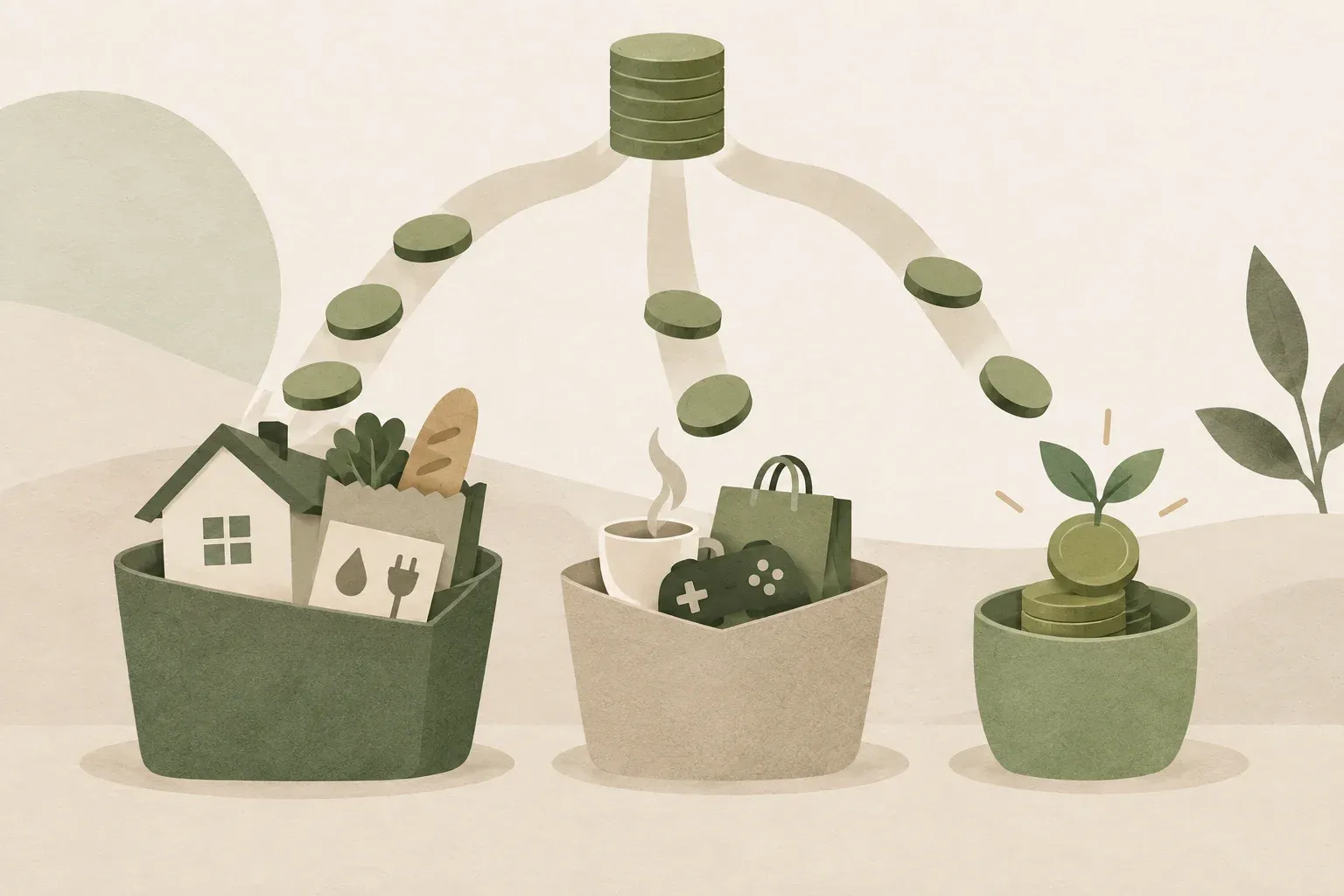
50%: Necessary expenses
Needs are costs required for living and working, such as housing, basic food, utilities, transport, medical care, necessary insurance, and minimum debt payments. Classification depends on circumstances: a car may be essential for one person’s work but optional for another.
30%: Wants and quality of life
Includes reducible expenses such as dining out, entertainment subscriptions, travel, hobbies, and nonurgent purchases. These are often the first cuts when money is tight. Spending on wants should fit the available budget.
20%: Save, invest, and make extra debt payments
Used to create Emergency fund , save toward goals, invest for the long term, or repay debt beyond minimums. With high-interest debt, repayment may take priority because interest costs are contractual while investment returns are uncertain.
Example when net income 30,000 baht
The initial allocation sets essential expenses at no more than 15,000 baht, wants at 9,000 baht, and savings or debt reduction at 6,000 baht. Use these figures to assess the balance between spending and saving, then adjust each month without insisting on exact proportions every time.
If necessary expenses exceed 50%, what should you do?
Do not force categories to make figures look good. Record reality first, then identify short- and long-term changes such as negotiating service fees, lowering commuting costs, or changing housing when appropriate. If essential expenses remain high, temporarily use 70/20/10 and review against actual spending.
Low income or high living costs can leave needs taking a large share. Do not use the rule to judge someone's money management: circumstances differ.
Consider another hypothetical case: take-home income is 30,000 baht, but actual needs are 17,000, already including 2,000 in minimum debt payments. Keeping wants at 9,000 and saving or extra debt repayment at 6,000 totals 32,000, a 2,000 shortfall. Reducing wants to 7,000 gives the budget below; it is not a universal allocation.
| Category | Amount (baht per month) | Share of take-home income |
|---|---|---|
| Needs, including minimum debt payments | 17,000 | 56.67% |
| Reduced wants | 7,000 | 23.33% |
| Saving and debt payments above the minimum | 6,000 | 20.00% |
| Monthly total | 30,000 | 100.00% |
The 6,000-baht category could contain 4,000 in savings and 2,000 in extra debt payments. Minimum payments are already in the 17,000-baht needs category and must not be added twice. The 56.67% and 23.33% shares are rounded to two decimals. The goal is a balanced budget with clear categories, not skipping essential costs or minimum payments to force needs down to 50%.
Who is this rule suitable for?
Useful for beginners recording expenses and seeking a simple overview. Irregular income, high debt, medical expenses, or urgent goals call for detailed budgets adjusted to actual cash flow.
Get started in 3 steps
Start with the take-home income you actually receive and categorize at least one month of past spending. Set up an automatic savings transfer for payday and review the budget monthly. Look at the trend over time without expecting every month to fit the rule exactly.
Sources
- Stock Exchange of Thailand: Choosing a Savings Method and Making It Enjoyable
- Bank of Thailand: Create good financial behavior
This article provides general knowledge. The appropriate proportion depends on each person's income, burdens, and goals.