
How to Read AI Benchmarks and Test Your Own Tasks
Should a model scoring 90% automatically beat one scoring 85%? It depends on what was tested, whether conditions matched, and relevance to your Thai-language tasks.

Use benchmarks to shortlist models, then test actual tasks
Seeing one AI model score 90% and another 85% may tempt us to choose the higher figure, but first ask What work does that score measure? Do they use the same testing method? And is it close to our work? A Benchmark is a set of questions and scoring methods designed to assess certain areas of ability. It is not a guarantee that the model will correctly answer 90% in all real world situations.
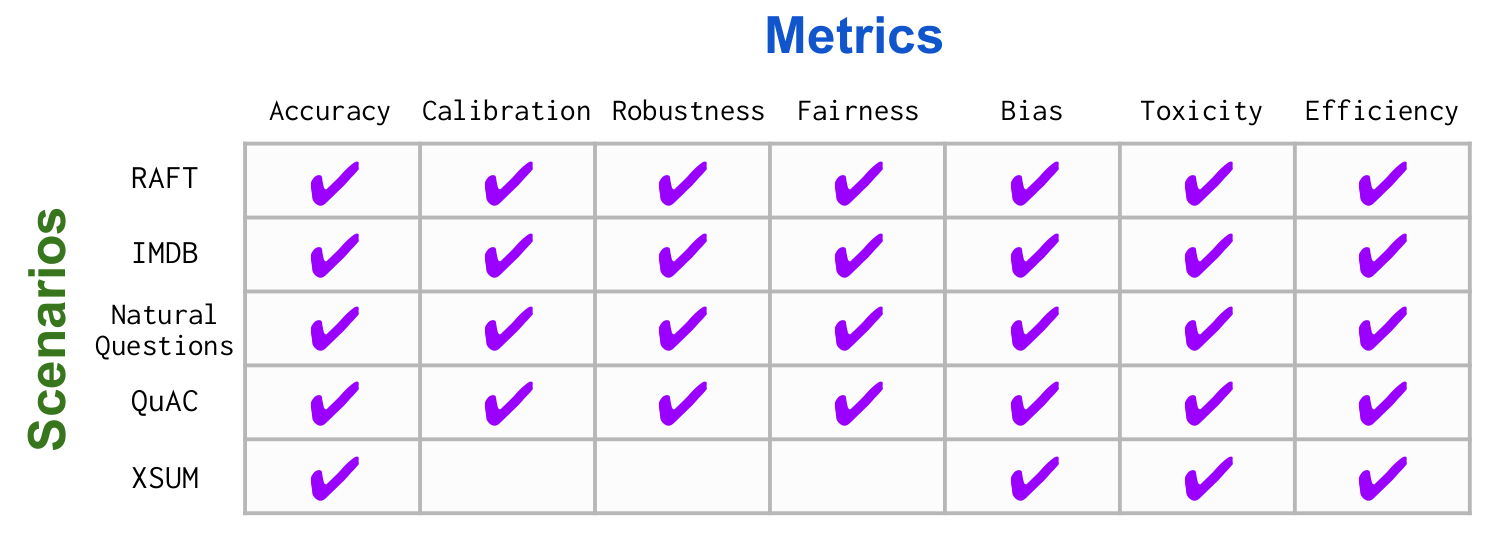
Research Stanford's HELM recommends evaluating multiple scenarios and metrics and disclosing unmeasured areas. Accuracy alone does not cover robustness to changing data, fairness, security, or efficiency. For general users, this means Use scores to shortlist models, then decide using your own real tasks
Read the test-set name before the score
Benchmarks have different scopes: multiple-choice knowledge, coding, or instruction following. For Thai report summaries, an English knowledge-test score may suggest general ability but does not establish accurate summarization of Thai figures.
| What the test suite emphasizes | Example | Questions that still need to be examined by yourself |
|---|---|---|
| Knowledge and reasoning through questions | MMLU and similar test sets | Can it explain actual work, or merely select the right answer? |
| Writes code and passes test cases | LiveCodeBench | How well does it read existing code, fix bugs, and work with our project? |
| Evaluate multiple aspects and contexts. | HELM | Are there Thai language jobs, risks, and costs that we are interested in including? |
These illustrate benchmark scope, not rankings of the best tests. Tasks, data versions, and criteria may change; read the creators' explanations before using scores. Sources: Hugging Face Leaderboards and LiveCodeBench
Why the same benchmark name does not ensure comparability
How questions are presented affects the score: for example, how many answer examples are provided in advance (zero-shot or few-shot), whether the model selects an option or generates text, how responses are sampled, and how correctness is judged. Even with the same named question set, scores may differ if the evaluation methods differ.
A verifiable case study is MMLU analysis of Hugging Face published 23 June 2023 The authors compare multiple evaluations of the same data set with implementation Then it was found that both the score and the model ranking may change. This lesson can also be used in terms of thinking. Even the numbers and model numbers in the original article are historical. Not the current ranking
Before comparing scores, check model names and tested versions, benchmark version, number of in-context examples, sampling/generation settings, judging criteria, and test dates. Missing key details leave substantial uncertainty.
Watch out for high scores on exams that the model may have seen.
Data contamination This means test data or similar content leaks into training data or model-tuning stages, so a score may reflect familiarity rather than the ability to solve new problems. Not every high score comes from this issue, but it is a reason to read how training and test sets are separated.
Project LiveCodeBench uses programming problems released over time and lets evaluators select date ranges to reduce contamination risk. Newer problems and this design still do not guarantee that contamination is eliminated.
Hypothetical example: A higher rated model may not be suitable for the task at hand.
Suppose a small team needs AI to read Thai customer emails and summarize follow-up tasks. It is considering models A and B. All figures in the following table are hypothetical teaching data, not results from real models.
| Criteria | Model A (hypothetical) | Model B (hypothetical) |
|---|---|---|
| General-knowledge benchmark scores | 90% | 85% |
| Meets all Thai email summarization criteria across 20 examples | 15/20 = 75% | 18/20 = 90% |
| Average response time per task under the same test conditions | 12 seconds | 7 seconds |
| Hypothetical cost per 100 tasks | 60 Baht | 40 Baht |
If the goal is complete, fast email summaries, model B appears better suited to the example despite its lower general-knowledge score. But just 20 tasks are too few to establish quality in every situation. Increase sample size and diversity and examine error types. Missing a deadline or an owner's name may matter more than awkward wording.
Calculating the passing rate in the example uses the formula Number of jobs that pass the criteria ÷ Total number of jobs × 100 Therefore, 15 ÷ 20 × 100 = 75% and 18 ÷ 20 × 100 = 90%. The cost section must specify the same conditions, such as message length. Using additional tools and the number of retries Otherwise, the price cannot be compared fairly.
Try evaluating your own work without having to be a researcher.
The following frame is KrobClick's Practical Proposal applied from the principles of multidimensional measurement and evaluated in the actual context of NIST AI Risk Management Framework Not a testing standard NIST requires everyone to use
- Define a single job clearly: For example, summarize customer messages into topic, issue, owner, and deadline without adding information absent from the source
- Make a sample set with reference answers: Start with ordinary and difficult cases: ambiguity, varied dates, mixed Thai/English, and insufficient information. Use hypothetical or authorized, deidentified data.
- Set passing criteria before testing: Require complete key information, no invented names or amounts, and explicit acknowledgment when the source does not answer. Do not change criteria mid-test to favor a model.
- Use the same conditions: Commands, data sets, number of reps, and time constraints must be comparable. If any model requires specific settings, note the differences.
- Record more than an overall score: Note down major errors, response times, estimated costs, consistency, and ease of human editing.
- Review before actual use: Require human review for consequential work and retest when model versions, instructions, or data change
For Thai, include realistic abbreviations, Buddhist Era dates, spacing, and proper names. English-only tests do not establish Thai quality. Before submitting real personal or company data, check the provider's data retention and usage policies.
What benchmarks do not tell you, and questions to ask before choosing
- Long, multistep tasks: A single answer score does not guarantee that the AI will perform multiple steps without getting lost on the topic.
- Quality of open-ended answers: Written work, analysis, or summary must have quality criteria and inspection by appropriate people.
- Actual cost and speed: may depend on input length, tool calls, system load, and service conditions at the time
- Security and Privacy: High knowledge scores do not establish that data management, permissions, or risks from incorrect answers meet organizational criteria
- Changes over time: Models, test sets, and scoring methods may change. Therefore, you must check the date and version. Do not rely on old rankings as current conclusions.
frame NIST AI RMF Emphasizes evaluation in context and monitoring risk before and during use. “Does it suit our task?” matters as much as “Who ranks first?”
Choose using two layers of evidence: public scores and your real tasks
Use public benchmark scores to shortlist models, then read the test method and try the models on your own tasks under the same conditions. Compare accuracy, error types, cost, time, and data constraints. If evidence is insufficient, continue testing. A leaderboard alone cannot establish whether an AI system fits the task.
Sources
- Stanford CRFM: Language Models are Changing AI — The Need for Holistic Evaluation (2022)
- Hugging Face: What’s going on with the Open LLM Leaderboard? (2023)
- Hugging Face: Leaderboards and Evaluations documentation
- LiveCodeBench: Official repository and evaluation methodology
- NIST AI Risk Management Framework: Measure function
Sources reviewed October 12, 2026 (Thailand time). This explains documentation, not KrobClick model test results. A/B figures are hypothetical and do not compare actual models.