
Start an AI Team: Roles, Handoffs, and Review Points
Better prompts improve work but do not themselves create an AI workflow system. For consistent recurring tasks, clarify processes, assign appropriate roles, and establish controls before increasing automation.

Start with the work, not the number of agents
Start with one hypothetical task, one creator, one reviewer, and a task owner making the final decision. Define deliverables and stop conditions before connecting real systems. People can hand work between roles in chat, so a multi-agent system is not necessary from the outset.
If you still can't decide how much AI should be able to do, use Five-level framework for delegation first. This article focuses on trying one workflow. It is not an installation guide or a guarantee that an AI team costs less than a single assistant.
Choose a recurring, time-consuming task whose output can be checked. A suitable first task has fairly clear steps, previous examples to compare against, and manageable consequences if the trial goes wrong. Then decide whether it needs an AI team.
Report summaries, message classification, document-format checks, and drafts can be more manageable starting tasks than finance, law, health, or corporate communications. Keep a human responsible for final approval.
Document the workflow before automating it
Many owners work well from experience but have never documented their process. Without a guide, AI must guess actions and decisions. Before building a system, record at least six elements.
- The work starts with what information or event?
- What must be checked before starting?
- Which conditions determine the decision?
- What format must the results have?
- What kind of work is considered passed?
- When uncertain, who should receive the escalation after stopping?
The guide does not need to be complete on day one. Document enough of the process to test it and resolve unclear steps using actual results.
Build a task-specific assistant before building a team
Once a process exists, create one narrowly focused assistant role, such as outlining articles, checking purchase orders, or sorting customer questions. Clearly define responsibilities, sources, output format, good examples, and when to ask a human.
Narrowly scoped assistants are often easier to evaluate because the measures are clearer: time saved, work accepted without revision, or cases correctly escalated to a person.
Connect tools once the process is stable
Once the assistant reliably repeats the workflow, connect real tools. For example, a customer submits a form, AI summarizes the requirements and opens a task, and staff review it.
Start with read access or drafts before editing and actual sending. Grant only necessary permissions and exclude personal or secret data where unnecessary. This limits damage from misunderstood instructions or untrusted information.
When to split work into an AI team
A single AI can take on too much responsibility when the process requires multiple skills. For example, preparing a competitor report requires searching, comparing, checking references, writing reports, and checking quality. We can then divide it into sub-roles and let the coordinator organize the work.
Roles must share goals and sources and identify whose output becomes whose input. Unclear handoffs can cause duplicate work or endless mutual revisions.
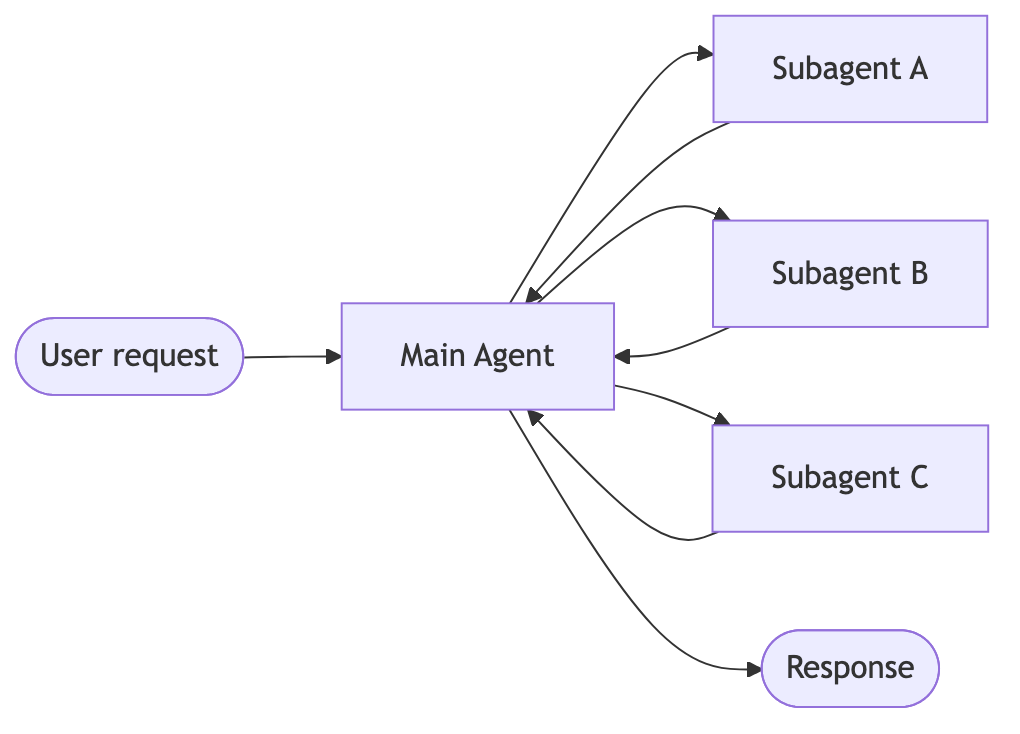
LangChain subagents documentation describes a lead agent deciding which assistants to call, what data to send, and how to combine results. In a manually coordinated trial, the task owner should perform this control role and give reviewers the source and criteria too. Reviewers seeing only the creator's answer may miss omissions.
Define controls before connecting automation
- Limited rights: Grant access only to the data and actions required for the task
- Budget limit: Set the cost, number of turns, and maximum time per mission.
- Keep a history: Record the AI's data, decisions, and completed actions
- Set approval point: Work that affects people, money, or important information must have someone responsible for inspecting it.
- Can be stopped: You must be able to cancel tasks, disconnect access, and review errors
The goal is a system where people spend time on decisions requiring accountability rather than repetitive tasks that can be specified and verified.
Hypothetical example: Appointment summary from three messages
Use this shared fictional source: “A: Can we talk Tuesday at 10:00?”, “B: Can we talk Wednesday, time undecided?”, and “C: Please change Monday to Thursday at 14:00.” The task only lists requests for the owner to confirm; calendar dates, time zones, and actual participant availability remain unknown.
| Role | Input data | Deliverables and limitations |
|---|---|---|
| Task owner | Original text and questions | Set criteria, approve missing information, and personally make the actual confirmation contact |
| creator | All three texts and the table format | Return customer / requested date and time / information to ask / supporting message. Do not book or send messages. |
| Reviewer | Same original, criteria, and draft tables as submitted. | Identify passed or invalid rows with source text. Don't solve an unknown date or time by guessing. |
Example prompt for the creator: “Put the three requests in a table and mark them as unconfirmed. Include the source text for every row. If no time is given, say it is unspecified. List the calendar dates and time zones that still need to be confirmed. Do not add calendar events.”
The correct draft must include A asking for Tuesday 10:00, B asking for Wednesday but the time has not yet been set, and C asking to change it to Thursday 14:00 by keeping the information that it was originally Monday in the notes. All three rows also need to confirm the calendar date and time zone. If the author includes a time of 09:00 for B, the reviewer must point out that the manuscript does not have this time and send it back for corrections.
Set trial rules first: one draft, at most two revision rounds, total runtime at most ten minutes, and a 20-baht cap for paid APIs. These are hypothetical limits, not guaranteed prices or times. If tools cannot measure or enforce them, keep human monitoring and do not enable autonomous operation yet.
Stop forwarding immediately if information conflicts, unauthorized disclosure is required, the budget limit is reached, or two revision rounds still fail. Send the latest draft and unresolved issues to the task owner. Do not make additional AI calls to bypass stop conditions.
Start with one creator and one reviewer
Start with one agent creating the work and another checking it against the criteria. Return failed work for correction within a clear revision limit. Use examples of errors to improve the guide and review criteria.
Add roles or tools once a small system consistently produces good results. Building an AI team begins with understanding your work, assigning clear responsibilities, and keeping important decisions with humans, rather than buying the most technology.
Also try the same tasks with one assistant. Record elapsed time, revision rounds, verifiable costs, and omissions. If divided roles do not meet the intended criteria, use the process that is easier to maintain. For evidence templates, see How to review AI agent deliverables distinguishing the handoff described here from proof that work is actually complete
Read more
- NIST: AI Risk Management Framework
- OWASP: Top 10 for Large Language Model Applications
- LangChain: Subagents and centralized coordination
This article proposes a general process design guideline. Capabilities, permissions, and data management vary according to organizational tools and policies. It is best to experiment on a small scale and check the results before using them for high-impact work.