
What is setup-pstack? Testing role-based model configuration
When a Skill pack delegates work to coders, reviewers, and planners, model choices can become scattered. setup-pstack gathers them into one settings file. This article uses the backnotprop/pstack version and tests rule generation in an isolated area, separate from the user's real settings.
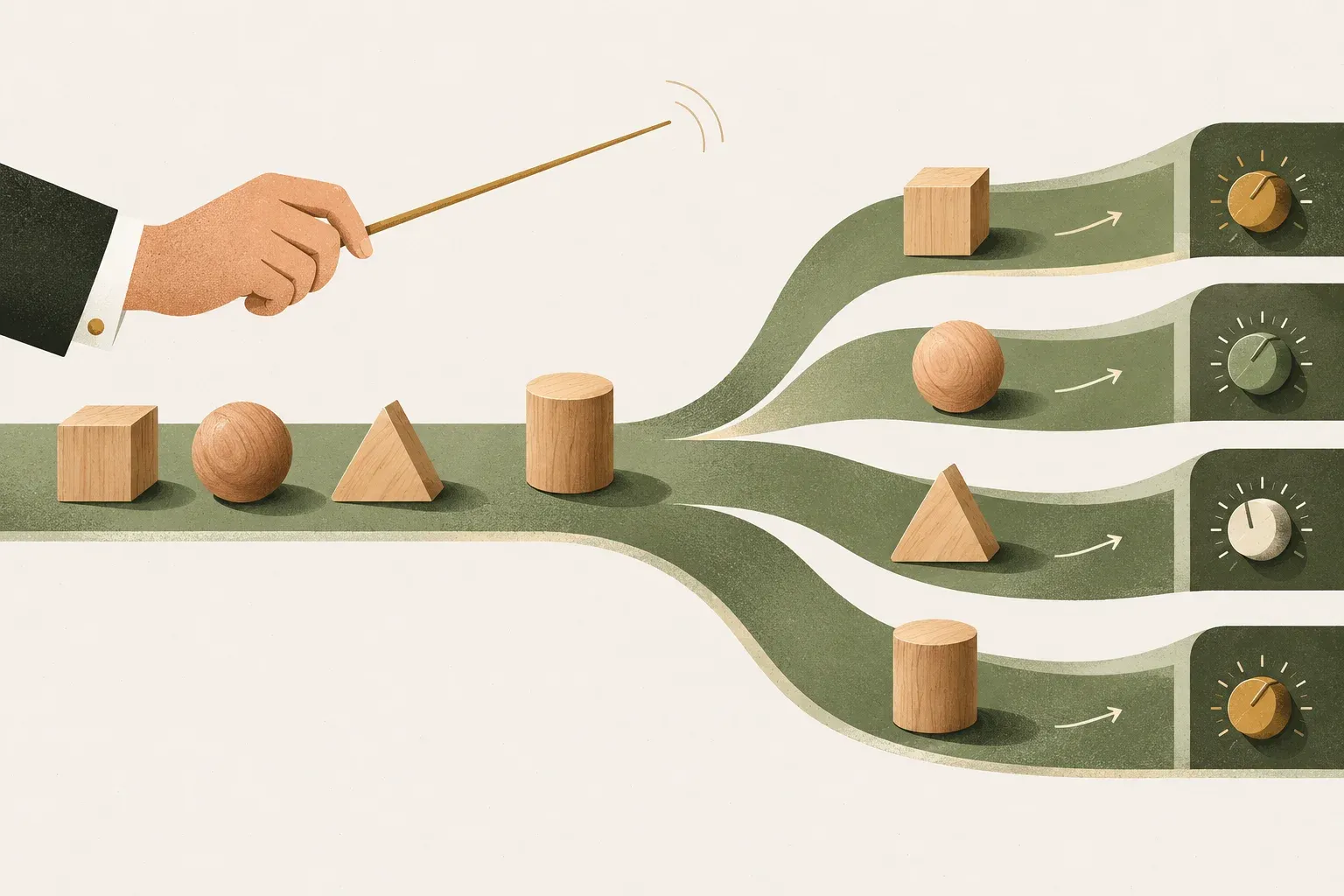
pstack is a Skill pack; setup-pstack configures it
pstack combines Skills and engineering practices for planning, implementation, review, and verification. setup-pstack selects a model and reasoning budget for each role so the pack reads a consistent set of choices. See the backnotprop/pstack README
This article uses the specified version of backnotprop/pstack, which adapts the original set for several harnesses: applications that give models access to tools, such as Cursor and Codex. A skill with the same name in another fork may write different files or call models differently, so check the source of the version you choose.
setup-pstack configures the model for each role
The main steps are to discover available models, read current settings, have the user choose a budget and models, validate the choices, and write the harness-specific rule. The source uses ~/.cursor/rules/pstack-models.mdc, ~/.claude/rules/pstack-models.md and ~/.agents/pstack-models.md for other harnesses.
These files do not create an app's database or deployment system, and installing a Skill does not grant access to unavailable models. Each harness controls accepted model names and rule loading. Recheck permissions and identifiers when moving settings between machines.
small is a preset name, not a spending cap
The reviewed version has four budgets: unlimited, large, medium, and small, with different reasoning targets. small targets medium reasoning. These names do not impose a currency or token ceiling; cost control still requires the runtime's limits and usage information.
inherit-parent and auto are aliases allowed by the source and remain unchanged when the budget changes. Selecting small with inherit-parent therefore does not establish that every child runs at medium effort. Separate the written rule from observed runtime behavior.
Testing rule generation with small and inherit-parent
The user selected small and inherit-parent for every role. We followed the Skill's instructions to generate a file under a simulated home in the test area. We did not install a rule in the real home or launch additional Agents that could incur charges or affect other chats.
The resulting file contains 17 role lines in the source format, uses aliases instead of unconfirmed model identifiers, and remains identical when written again. This experiment verifies the configuration format It does not establish that a harness loads the file, delegates successfully, or incurs a particular cost.
Reproduce the check using the isolated rule-generation experiment which shows the destination and assertions actually run.
Install pstack and check where it writes its rules
The mirror’s README lists this command for selecting and installing skills in supported tools. Before running it, pin a version, review the files, and check where it writes rules. The article’s example followed the instructions manually and did not test this installer.
npx skills add backnotprop/pstackBefore real use, confirm every role's mapping with the user, back up existing rules, and run a small task while inspecting actual model calls. Successfully writing a settings file is not sufficient evidence that delegation works.
Useful when several roles need consistent configuration
A central rule makes choices easier to inspect when using several pstack Skills. For a short, single-Agent task, extra roles and panels may add unnecessary steps. Start with the outcome you need to verify, then choose how to divide the work.
Keep the harness, Skill version, available account models, and actual call results together so you can diagnose changes to names or access. For more on checking evidence, see How to review and accept work from an AI agent
Sources
Reviewed backnotprop/pstack commit 25abb38559ddbabec563646224d09eff9a250eca on October 30, 2026. The configuration-only experiment used a simulated home. It did not install real rules, launch subagents, or measure costs.